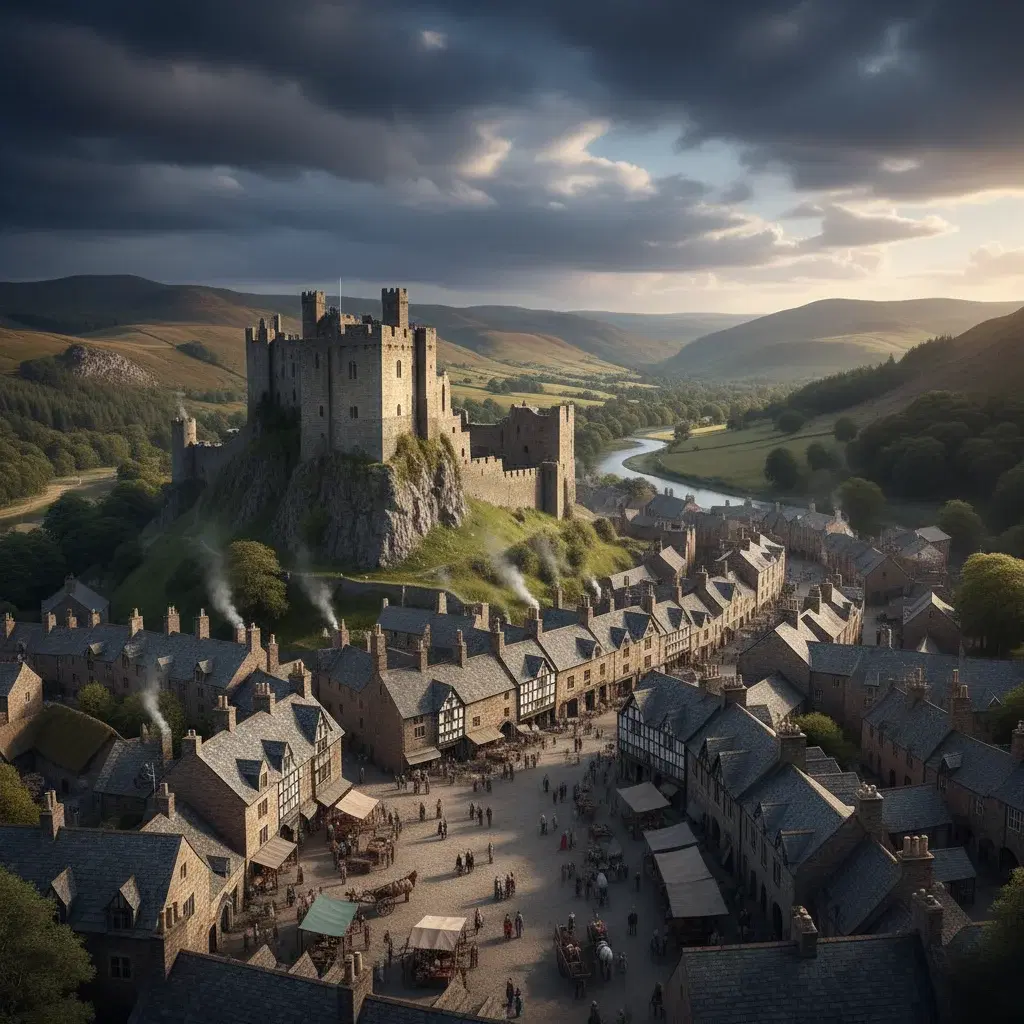
Historic Trades and Crafts of Alnwick
Tanners, cordwainers, blacksmiths, weavers, coopers, and the ten incorporated companies of freemen -- the traditional trades that sustained Alnwick as a market town for centuries.
Alnwick has been a market town since 1200, and for most of those eight centuries its economy was built on the trades of its freemen -- tanners, shoemakers, weavers, blacksmiths, coopers, and the merchants who bought and sold their goods. The Percy family at the castle provided the town with its military and political significance, but it was the tradespeople who kept it alive.
The Ten Incorporated Companies
Alnwick's civic life was governed by ten incorporated companies of freemen -- the trade guilds that controlled economic activity within the borough:
- Cordwainers -- shoemakers and leather workers
- Skinners and Glovers -- furriers and glove-makers
- Merchants -- traders and shopkeepers
- Tanners -- hide processors
- Weavers -- cloth producers
- Blacksmiths -- metalworkers and farriers
- Butchers -- meat processors
- Joiners -- woodworkers and furniture makers
- Tailors -- clothing makers
- Coopers -- barrel and cask makers
Freedom of the borough was gained either by birth (as the son of an existing freeman) or by serving a seven-year apprenticeship to a freeman resident in the borough. Only freemen could practise their trade within Alnwick's boundaries.
Best for: Alnwick's ten incorporated companies controlled who could work in the town for centuries. Freedom of the borough required a seven-year apprenticeship or birth to a freeman.
Tanning
Tanning was one of Alnwick's most important industries. The first recorded Alnwick tanner was Adam Tanner, who appears on the Lay Subsidy Roll of 1296 -- a tax record that provides the earliest evidence of the trade in the town.
The River Aln provided the reliable water supply that tanning required, and the surrounding woodlands supplied the oak bark used in the tanning process. Hides were soaked in lime to remove the hair, scraped clean, and then immersed in pits of tanning liquor -- a process that could take up to a year.
The Tanners were among the wealthiest of the ten companies. Closely associated with them were the Cordwainers (shoemakers), who turned the finished leather into boots, shoes, and other goods. In 1762, there were 55 cordwainers working in Alnwick -- a remarkable number for a small market town and a reflection of how central leatherwork was to the local economy.
The tanning industry declined in Alnwick during the 19th century, but the Alnwick and District Local History Society has documented the locations and history of the town's tanneries.
The Cattle Market
Alnwick's weekly cattle market was one of the main markets in Northumberland until the late 18th century. Livestock buyers came from across the county and beyond, and market day was the commercial heart of the week.
The cattle market sustained a network of related trades. Drovers brought herds down from the Scottish borders and the upland farms. Butchers slaughtered and sold the meat. Tanners processed the hides. Tallow chandlers made candles from the fat. Nothing was wasted in a pre-industrial economy, and the market was the place where all of these trades intersected.
The market has been held in the Market Place in the centre of town since 1200, and a weekly market still operates there every Thursday and Saturday.
Best for: Alnwick's cattle market sustained a chain of trades -- drovers, butchers, tanners, tallow chandlers -- where nothing from the animal was wasted.
Blacksmithing
The Blacksmiths' Company was one of the ten incorporated guilds. In a town that served a large agricultural hinterland and a castle garrison, the blacksmith was essential. Horses needed shoeing, ploughs needed sharpening, gates and hinges needed forging, and the ironwork of buildings and carts needed constant repair.
Alnwick's position on the Great North Road between Edinburgh and London meant a steady stream of travellers with horses that needed attention. The blacksmith's forge was one of the most important businesses in any town on a coaching route.
Brewing
Alnwick had extensive breweries supplying the town's inns and the surrounding area. Brewing was a natural industry in a market town with good water, a supply of barley from local farms, and a garrison at the castle that needed provisioning.
The brewery trade was eventually consolidated into larger companies, but the tradition of local brewing persisted into the industrial era. The inns and public houses that clustered around the Market Place and Bondgate were the social centres of the working town.
Rope Making and Other Trades
Rope making was practised in Alnwick, serving the agricultural community (for tethering animals, binding loads, and operating machinery) and the wider market. Coal mining on a small scale also contributed to the economy, and limestone quarrying provided building material and lime for agriculture.
The Percy Estate
The Percy family at Alnwick Castle were not tradespeople, but their presence shaped the town's economy for seven centuries. The castle required a permanent garrison, which needed feeding, clothing, and equipping. The Percy estates employed gamekeepers, foresters, gardeners, and farm workers across the surrounding land. The family's patronage supported the market, the church, and the physical fabric of the town.
In the 18th century, the Percys employed Capability Brown to landscape the castle grounds and commissioned the rebuilding of much of the town. The architectural character of modern Alnwick owes as much to Percy patronage as to any trade.
Evidence That Remains
- The Market Place: The wide central space where the market has been held since 1200 remains the commercial heart of Alnwick.
- Bondgate Within and Bondgate Without: The names record the division between bondsmen who served the castle inside and outside the town walls.
- Bailiffgate Museum: Documents the full history of Alnwick's trades through photographs, artefacts, and oral histories.
- The street pattern: The narrow plots running back from the main streets (burgage plots) reflect the medieval layout where tradespeople lived above or behind their workshops.
- Barter Books: The former railway station, now one of the largest second-hand bookshops in Europe, marks the arrival of the railway that gradually undermined the old coaching-route economy.
Frequently Asked Questions
What trades were practised in Alnwick?
Alnwick's ten incorporated companies were the Cordwainers, Skinners and Glovers, Merchants, Tanners, Weavers, Blacksmiths, Butchers, Joiners, Tailors, and Coopers. Tanning and the cattle market were the most important industries until the 19th century.
Was Alnwick a tanning town?
Yes. The first recorded tanner in Alnwick was Adam Tanner in 1296. By 1762, there were 55 cordwainers (shoemakers) working in the town, reflecting the scale of the leather trade. The industry declined during the 19th century.
What is the connection between the Percy family and Alnwick's trades?
The Percy family at Alnwick Castle were the town's major patrons and employers. The castle garrison needed provisioning, the Percy estates employed hundreds of workers, and the family's building commissions sustained the local trades of joiners, masons, and blacksmiths for centuries.
Never miss what’s on
Join the weekly Alnwick.live digest — the best events, news and local tips, straight to your inbox. Free, one email a week.
What's On
Northumbrian Pipes at Alnwick Castle
From 10:30 AM, performances through the day · Alnwick Castle, Alnwick, NE66 1NQ
Tom Fool at Alnwick Castle
11:00 AM, 1:00 PM and 3:00 PM · Inner Bailey, Alnwick Castle, Alnwick, NE66 1NQ
Hadestown: The Musical (screening)
4:15pm · Alnwick Playhouse Studio, Bondgate Without, Alnwick, NE66 1PQ