Alnwick in World War II
RAF Boulmer, the castle as a wartime school, evacuees from Newcastle, the Home Guard, and the war memorial with 76 names -- Alnwick in the Second World War.
Alnwick in 1939 was a quiet market town dominated by its medieval castle, thirty miles north of Newcastle and a world away from the industrial Tyne. But the Second World War reached even here. The castle became a boarding school for evacuated girls. A decoy airfield with dummy Spitfires was built on the coast. The Home Guard drilled in the castle grounds. And 76 names were added to the war memorial on Bondgate Without. This is the story of Alnwick at war.
RAF Boulmer: The Airfields
Alnwick did not have an RAF station within the town, but the surrounding Northumberland countryside was dotted with military airfields. The most significant was RAF Boulmer, situated on the coast due east of Alnwick, equidistant between Newcastle and Berwick-upon-Tweed.
The Decoy Airfield
Boulmer's wartime life began in 1940 as a decoy airfield called Longhoughton. Dummy Hurricane and Spitfire aircraft -- constructed from wood and canvas -- were placed on the grass to draw German bombing raids away from genuine RAF stations like Acklington, a few miles to the south. The decoys were protected by four Lewis machine guns mounted on tripods. It was a dangerous bluff: the men who guarded the fake aircraft were all too real.
Best for: RAF Boulmer began in 1940 as a decoy airfield with dummy Spitfires and Hurricanes, designed to draw German bombers away from RAF Acklington.
Operational Use
In March 1943, RAF Boulmer reopened as a satellite airfield to house the advanced flights of No. 57 Operational Training Unit -- a Supermarine Spitfire training unit based at RAF Eshott. Trainee fighter pilots flew from Boulmer's grass strips, practising the skills they would need over occupied Europe.
In November 1943, the station became home to No. 9 Battle Training School, where pilots were taught night flying, dive-bombing, strafing, and fighter tactics. The Northumberland coast, with its empty beaches and open skies, provided ideal conditions for low-level training flights.
RAF Boulmer remains an active RAF station today, serving as the home of aerospace surveillance and control for the Royal Air Force.
Other Airfields
The wider Alnwick area was surrounded by military airfields during the war. RAF Acklington, to the south, was a major fighter station. RAF Brunton, near Chathill to the north, was a little-known training airfield. RAF Eshott, near Morpeth, trained Spitfire pilots. The skies above Northumberland were busy with aircraft throughout the war -- a far cry from the peaceful countryside the area is known for today.
The Castle's Wartime Role
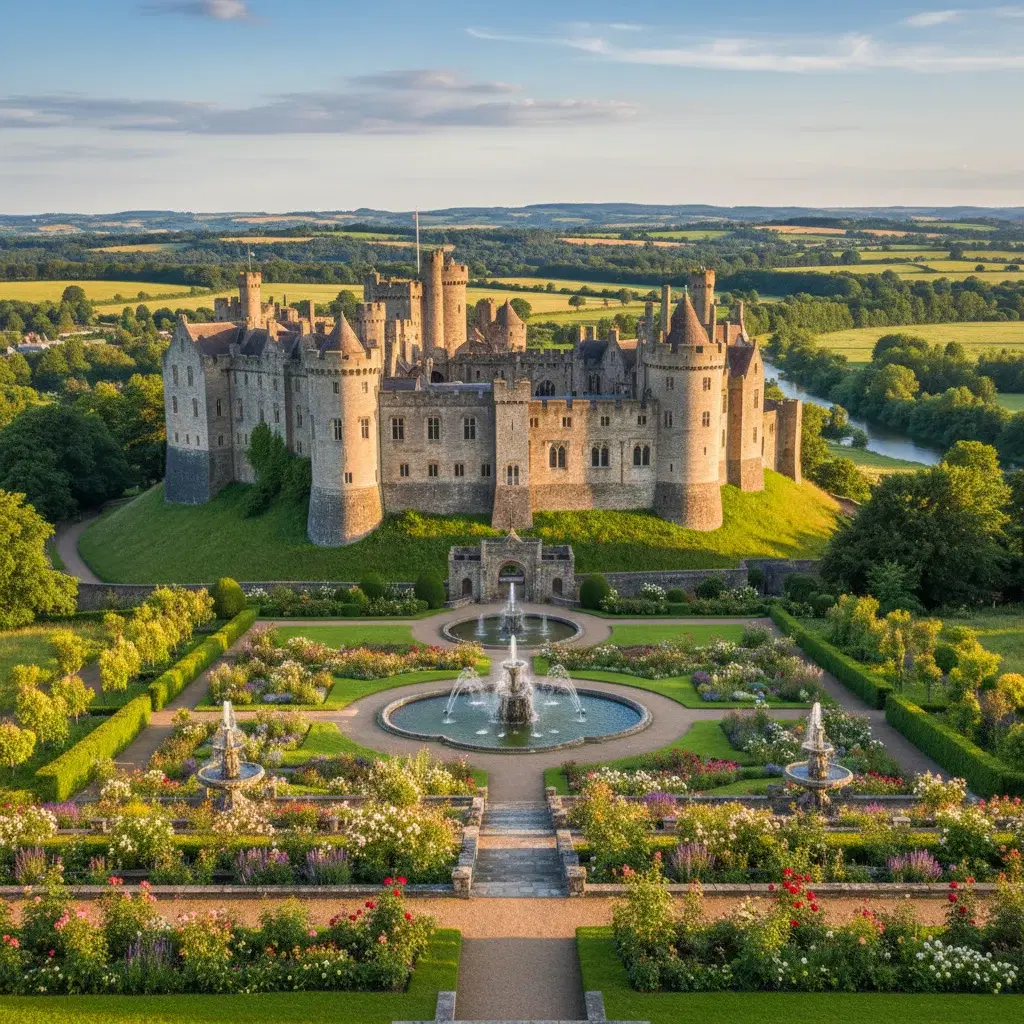
Alnwick Castle -- the ancestral seat of the Percy family for over 700 years -- was given over to wartime use as a school for evacuated children.
Newcastle Church High School
When war was declared in 1939, the threat of bombing raids on Newcastle made the city's schools unsafe. Newcastle Church High School for Girls was evacuated to Alnwick, thirty miles north, where the castle was considered far enough from the industrial targets of Tyneside to be safe.
The medieval castle was kitted out to accommodate 120 boarders and 20 staff. Other pupils were billeted with local Alnwick families. The youngest child was just four years old; the eldest was seventeen. For these Newcastle schoolgirls, the castle that tourists now visit as a Harry Potter filming location was their school, their dormitory, and their wartime home.
Best for: Newcastle Church High School for Girls was evacuated to Alnwick Castle in 1939. The castle housed 120 boarders and 20 staff, with the youngest evacuee aged just four.
The school remained at the castle for the duration of the war. The Duke of Northumberland made the building available as part of the broader national effort to protect children from the Blitz. After the war, the evacuees returned to Newcastle, and the castle reverted to its peacetime role.
In recent years, wartime evacuee pupils have been reunited at the castle to share their memories of the years they spent there -- a reminder that behind the grand walls, children grew up far from home.
Evacuees in Alnwick
The castle school was the most prominent example, but Alnwick received evacuees more widely. Children from Newcastle and Tyneside were sent to rural Northumberland as part of the national evacuation programme that began in September 1939.
Alnwick, as a market town with spare capacity in its homes and schools, received families and unaccompanied children. Some were welcomed warmly; others struggled to adapt to small-town life after the bustle of Newcastle. The culture shock ran both ways -- Alnwick's residents were sometimes unprepared for the needs of large numbers of urban children arriving with little notice.
The Home Guard
Alnwick raised its own battalion of the Home Guard -- the 2nd (Alnwick) Battalion, Northumberland Home Guard. The men -- too old, too young, or in reserved occupations that prevented them from joining the regular forces -- trained in the grounds of the castle and in the fields around the town.
The Home Guard's role was to defend the local area in the event of invasion or airborne attack. In Northumberland, with its long coastline and scattered population, this was not an idle concern. German reconnaissance aircraft regularly overflew the area, and the east coast was considered vulnerable to commando raids or diversionary landings.
The Alnwick battalion guarded key points, manned observation posts, and trained with whatever weapons were available -- which, in the early days, was often very little. A photograph from 1943 shows the Alnwick Home Guard assembled in the castle grounds, by which point the invasion threat had receded and the unit was better equipped.
Best for: The 2nd (Alnwick) Battalion, Northumberland Home Guard trained in the castle grounds and guarded key points across the local area.
The War Memorial
The Alnwick War Memorial stands at the junction of Denwick Lane and Bondgate Without. It was unveiled by the Duke of Northumberland on 11 November 1922 -- Armistice Day -- and is a Grade II listed Doric column set upon a triangular sandstone base. Bronze statues stand on each of the three corners.
The memorial was originally erected for the First World War, but after 1945, 76 names from the Second World War were added. Seventy-six men and women from a small market town -- a devastating toll for a community of Alnwick's size.
The memorial is the focal point for the annual Remembrance Day service, when the town gathers to honour those who did not come home.
What Remains
RAF Boulmer is still an active military station -- the only one of the wartime airfields in the area that remains in RAF use. The castle has returned to the Percy family and is now one of the most visited historic houses in England. The evacuees have gone home, though their memories are preserved in oral history projects and occasional reunions at the castle.
The war memorial on Bondgate Without stands as it has since 1922, with the 76 Second World War names a permanent addition. The Bailiffgate Museum in Alnwick holds material relating to the town's wartime history, including photographs, documents, and personal accounts from the period.
The fields where dummy Spitfires once stood are farmland again. The skies where trainee pilots practised dive-bombing are quiet. But the names on the memorial are still read aloud every November.
More on Alnwick's heritage: read our guides to the Percy dynasty, Alnwick Castle, the heritage walking trail, and Alnwick on screen. Browse the local directory or check what's on this week.
Know something we've missed? Get in touch and we'll add it.
Never miss what’s on
Join the weekly Alnwick.live digest — the best events, news and local tips, straight to your inbox. Free, one email a week.
What's On
Northumbrian Pipes at Alnwick Castle
From 10:30 AM, performances through the day · Alnwick Castle, Alnwick, NE66 1NQ
Tom Fool at Alnwick Castle
11:00 AM, 1:00 PM and 3:00 PM · Inner Bailey, Alnwick Castle, Alnwick, NE66 1NQ
Hadestown: The Musical (screening)
4:15pm · Alnwick Playhouse Studio, Bondgate Without, Alnwick, NE66 1PQ